
La Frontera y Nuevo Mexico
The Border and New Mexico
La Frontera y Nuevo Mexico: The Border and New Mexico
The cultural ramifications of national borders have become an increasingly important topic in anthropology, mirroring the global importance of the topic in general.
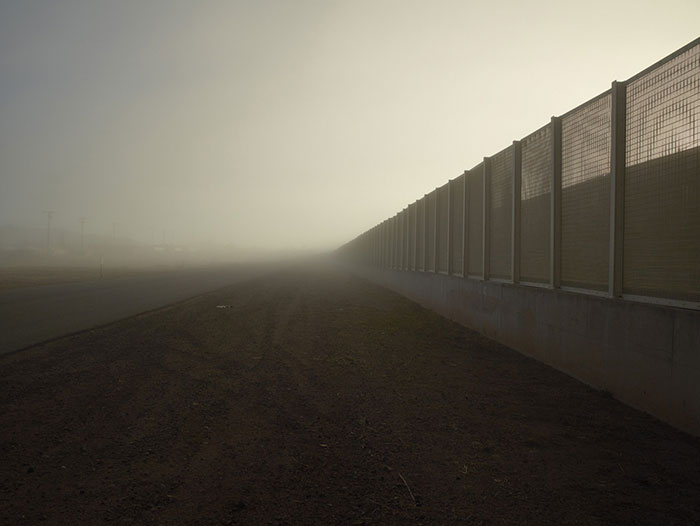
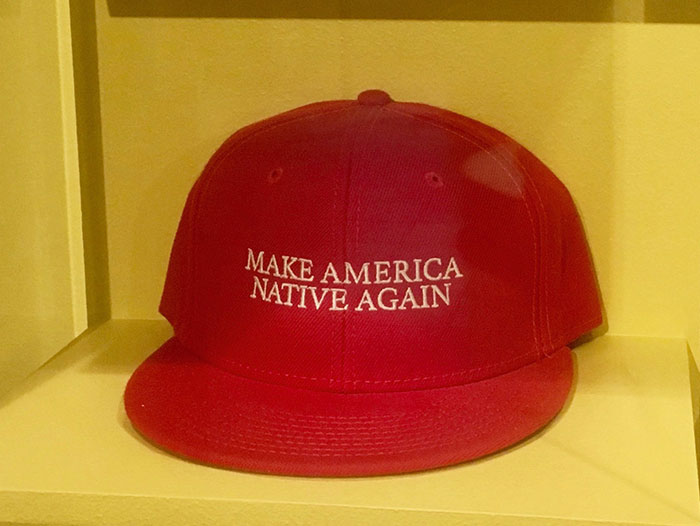
Because New Mexico is on the U.S.-Mexico border, the politics of that border are deeply important to the state and its people. The recent presidential elections also made the border and immigration controversial issues. In announcing his presidential bid, Donald Trump said:
“When Mexico sends its people, they’re not sending their best…They’re sending people that have lots of problems, and they’re bringing those problems with us. They’re bringing drugs. They’re bringing crime. They’re rapists. And some, I assume, are good people.”
He went on to say:
“I will build a great wall—and nobody builds walls better than me, believe me—and I’ll build them very inexpensively. I will build a great, great wall on our southern border, and I will make Mexico pay for that wall. Mark my words.”
(June 16, 2015)
In light of recent events and the long and complicated history of the U.S.- Mexican border, this exhibition examines border and immigration policies and realities from an anthropological perspective. We ask what the border means to different people, and what the border means to you.
Please participate by offering us your thoughts and images in the box provided here or at our online version of this exhibition.

Origins of the U.S./Mexican Border: Colonialism and Mapping
As Europeans claimed different parts of the Americas, beginning in 1492, such claims were marked on maps. Through this system of claiming and mapping, the forerunners of today’s American nation-states began to emerge. However, the early borders between European-defined spaces were open and fluid compared to borders today.
The contemporary concept of a nation-state with static borders evolved from the Peace of Westphalia, negotiated in what is now Germany in 1648. As Europe dominated the rest of the world, the European geopolitical practice of mapping sovereign territories became the international norm. The corresponding right to control migration between nation-states often clashed directly with Indigenous concepts of human relationships to the land.
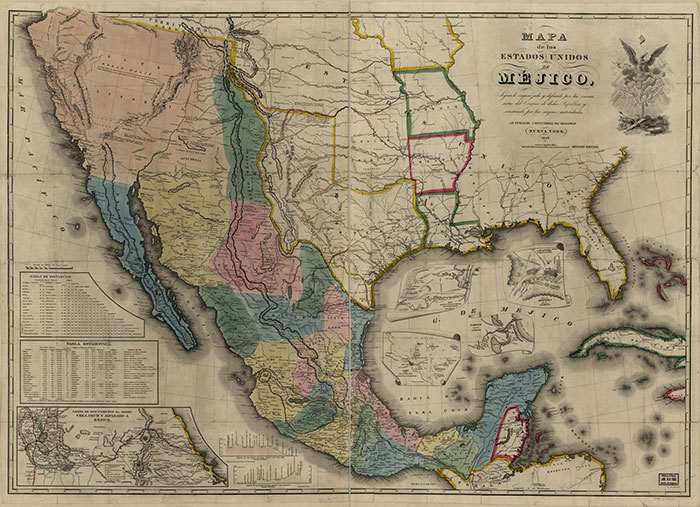
The U.S.-Mexican border has moved many times. The two nations have shared a boundary since the Louisiana Purchase of 1803, when Mexico was still a Spanish colony. The boundary shifted when the U.S. annexed Texas in 1845, again in 1848 after the U.S. invasion of Mexico, and in 1854 after the Gadsden Purchase—always at Mexico’s expense. For most of those years, people traveled freely between the two countries, with no fence (or perhaps a cattle fence) between them, much like the U.S.-Canadian border today. Armed patrols of the U.S.-Mexican border began only in 1904 and for years were concerned with stopping Chinese migrants, not Mexicans. Federal authorities turned a blind eye to the seasonal flow of cheap farm labor across the international border. The obsession with sealing the U.S. border with Mexico is a recent development. Like the Berlin wall before it, Donald Trump’s proposed wall is an extreme expression of the post-1648 European legal concept of sovereignty.
(detail) “Mapa de los Estados Unidos de Méjico.” 9th ed. By John Disturnell, 1847
The Day I Crossed the Border Illegally
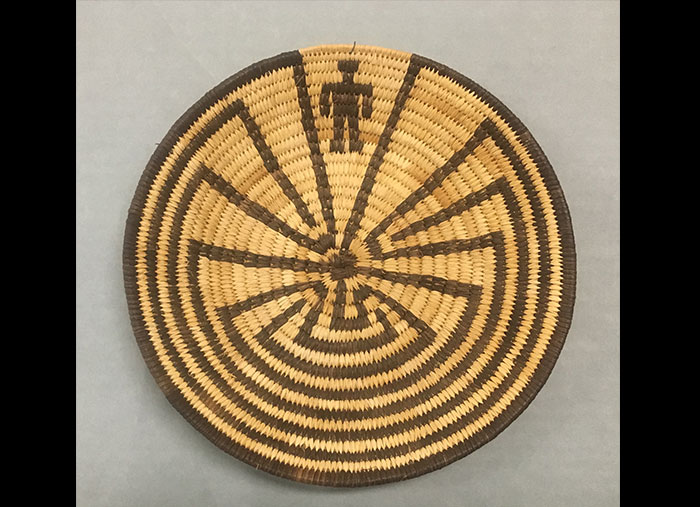
“One day in the 1970s, I went out to the Tohono O’Odham Reservation with friends to help a farmer harvest wheat. As we stood in the desert west of Tucson, he gave each of us a sickle. Like my distant ancestors, I bent over the ripe wheat to cut and gather it. At noon we drove to the farmhouse for a meal of chile con carne and flour tortillas. Then it was back to the field to finish the work.
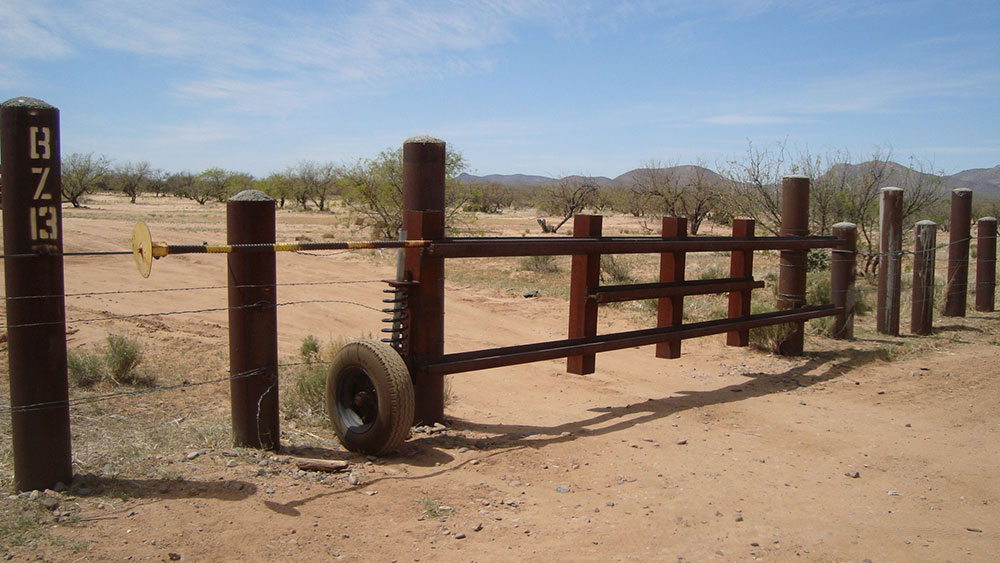
The wheat field was a few yards north of a barbed-wire cattle fence marking the international boundary. The farmhouse was south of the fence. When the boundary was surveyed following the Gadsden Purchase of 1854, the field was transferred to the United States but the farmhouse remained in Mexico. The family continued using the farm as they always had. After the cattle fence was installed they added a gate and went back and forth as needed. On this day we drove into Mexico then back into the United States, quite illegally as far as those two nations were concerned. Not that they knew. For that farmer (and on that day for us), what mattered was the planet’s natural continuity, not a division imposed from distant capitals.
When I hear about ‘a beautiful wall,’ I think back to that day. When I hear about deporting millions, I fear what may happen. I was born in South America but my parents were both U.S. citizens, and I have always claimed to be a “natural born citizen” as described in the Constitution. Will that claim now be denied? Even if it is, I doubt that I’ll be booted out of the country. I look “Anglo”—and let’s face it, not looking “Anglo” is a big part of the current zeal for deportation. Still, given my birth in South America, when I hear that Latin American immigrants aren’t as good as other people, I feel the sting.”
Dave Phillips, Ph.D., Interim Director, Maxwell Museum of Anthropology, UNM
(detail) from website: https://klandersenborderlands.wordpress. com/2014/04/20/tohono-oodham-nation-living-through-the-border/
Repellent Fence: Post commodity and the Border
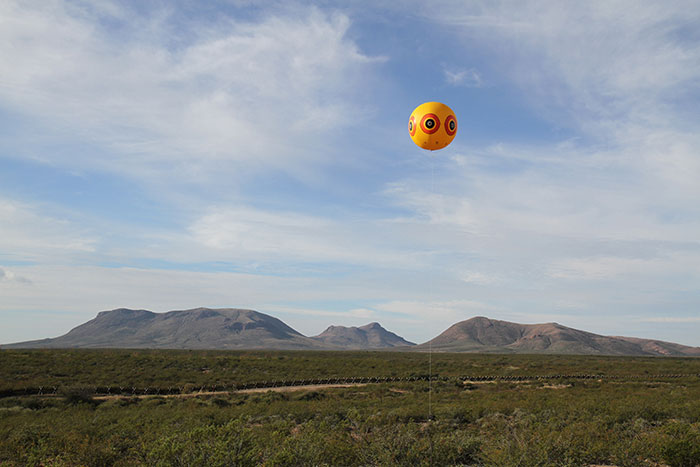
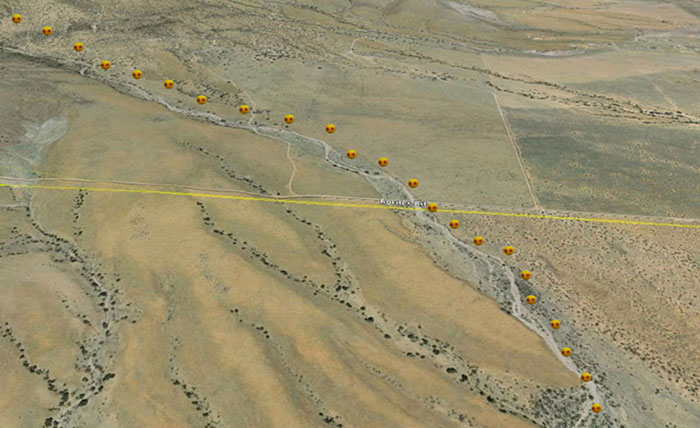
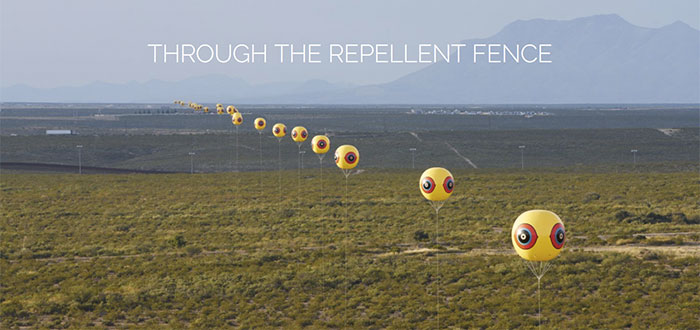
“The Repellent Fence is a social collaborative project among individuals, communities, institutional organizations, publics, and sovereigns that culminate with the establishment of a large-scale temporary monument located near Douglas, Arizona and Agua Prieta, Sonora. This 2 mile long ephemeral land-art installation is comprised of 26 tethered balloons that are each 10 feet in diameter, and float 50 feet above the desert landscape. The balloons that comprise Repellent Fence are enlarged replicas of an ineffective bird repellent product. Coincidently, these balloons use indigenous medicine colors and iconography — the same graphic used by indigenous peoples from South America to Canada for thousands of years. The purpose of this monument is to bi-directionally reach across the U.S./Mexico border as a suture that stitches the peoples of the Americas together—symbolically demonstrating the interconnectedness of the Western Hemisphere by recognizing the land, indigenous peoples, history, relationships, movement and communication.
…the intention of Repellent Fence is to organize a network of dialogues between indigenous, United States, and Mexican publics and their government agencies. The intentions for these generative dialogues are to form local and external capacities for the recovery of transborder knowledges that have been arrested through binary discourses. The benefit of these narratives are to identify and support indigenous and border community interests, desires, concerns, and goals for creating a more safe, healthy, and culturally appropriate borderlands environment for its citizens.”
Excerpted from the Repellent Fence Statement on the Postcommodity website: http:// postcommodity.com/Repellent_Fence_English.html
“I’ve been in the United States for 17 years now, and it is my home. I lived in Arizona for 11 years before moving to Albuquerque. We moved due to the enactment of SB1070* that was passed during the reign of Arpaio.** This law would allow local police officers to act as immigration officers, and the thought of this frightened my family enough that we decided to relocate to Albuquerque to be safe from predatory law enforcement officers. While I spent all of my childhood in Arizona, I’ve spent all of my adulthood in Albuquerque. I must admit even after almost 7 years I miss Arizona and I miss my grandparents.
However, now that I am in Albuquerque I have found great academic and professional development that has led me to believe that this is the place of great opportunity. But, due to the current political climate, I am always reminded that I am first and foremost undocumented and that any achievements both academically and professionally come second to my immigration status. However, I remind myself that my mother, sister, and I did not run, jump, and crawl across the desert, escaping an abusive father, to remain marginalized in the United States. We came here to escape abuse, but also for a better life.”
Selene Vences, DREAMer*** and UNM Student
* SB1070 or the Support our Law Enforcement and Safe Neighborhoods legislative act was introduced in Arizona in 2010, as an extremely broad, strict and controversial anti-illegal immigration act. The act has subsequently, largely been struck down by U.S. the Supreme Court.
** This refers to Joe Arpaio, the former Maricopa County Sherriff who was outspoken about illegal immigration. Since loosing re-election for County Sherriff, the U.S. Department of Justice concluded that he oversaw the worst pattern of racial profiling in U.S. history, and subsequently filed suit against him for unlawful discriminatory police conduct.
*** “DREAMer” is the term that describes young undocumented immigrants who were brought to the United States as children, who have lived and gone to school here, and who in many cases identify as American. The term originally took its name from a bill that has been proposed in Congress numerous times, the DREAM Act, but has never passed. The DREAM Act (short for Development, Relief and Education for Alien Minors Act) was a bill in Congress that would have granted legal status to certain undocumented immigrants who were brought to the United States as children and went to school here.
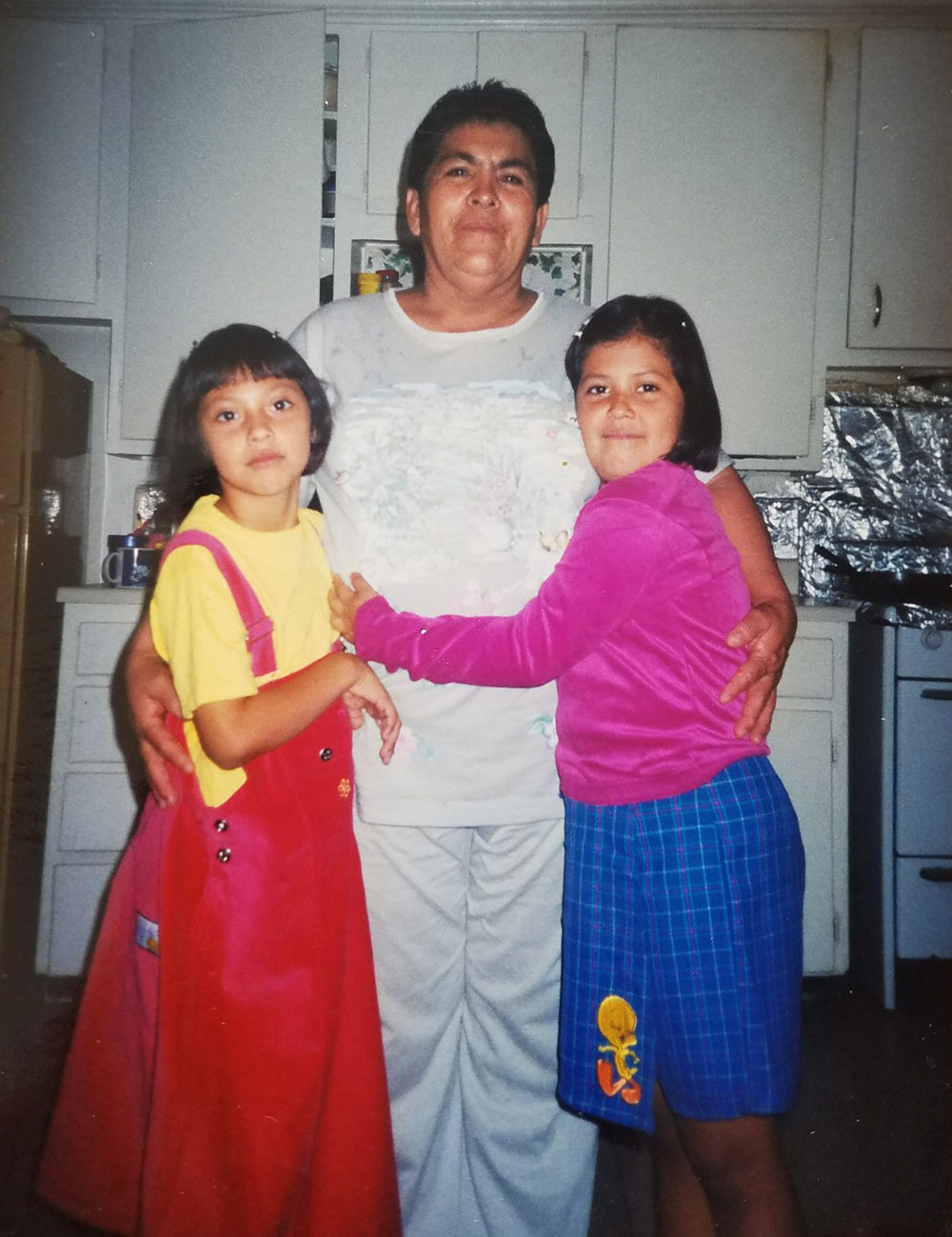
Nora Vences Ortiz (left) and Selene Vences (right) on either side of their grandmother, in their one-bedroom apartment in Glendale, AZ, circa 2003.
Photo Courtesy: Selene Vences
Nine Numbers*
“To be an immigrant is to fight against privilege that was given in the form of nine numbers. Without these advantageous numbers, you can’t get anywhere in the United Stated. You can’t buy a car, house or hold a job unless you find a way to do so which immigrants do to provide for their families. Being an immigrant to me means fighting the odds and an oppressive, broken system that prevented me from coming here in a legal manner. I’ve worked hard to get my education and help sustain my family. I continue to strive for a higher education paying out of pocket for my schooling since I don’t have nine numbers that give me financial assistance.
Being an immigrant is working twice as hard and getting less than what you work for. Being an immigrant is living in fear that you won’t see a loved one the following day. Being an immigrant is being told you’re not worthy of a country that was founded on immigration itself, while they exclude you. Being an immigrant is never surrendering to the obstacles that were placed in front of you and persevering for a better future.”
Nora J. Vences Ortiz, DREAMer**
* “Nine Numbers” refers to the 9-digit U.S. Citizenship and Immigration Services number listed on the front of Permanent Resident Cards (Form I-551) issued after May 10, 2010, which is the same as the Alien Registration Number (A-Number). The A-number can also be found on the back of these Permanent Resident Cards.
** “DREAMer” is the term that describes young undocumented immigrants who were brought to the United States as children, who have lived and gone to school here, and who in many cases identify as American. The term originally took its name from a bill that has been proposed in Congress numerous times, the DREAM Act, but has never passed. The DREAM Act (short for Development, Relief and Education for Alien Minors Act) was a bill in Congress that would have granted legal status to certain undocumented immigrants who were brought to the United States as children and went to school here.
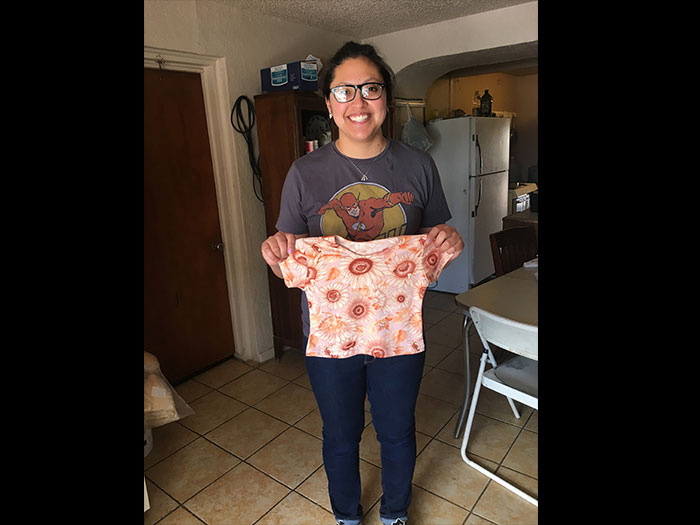
(detail) T-shirt worn by Nora J. Vences Ortiz when she crossed the border from Mexico to the U.S. when she was a baby, and kept by her grandmother these many years.
Photo Courtesy: Nora Vences Ortiz

In Many Ways This Is All I Know
“To be an immigrant is to fight against privilege that was given in the My name is Nalleli Reyes Garcia, I was born in Michoacán, Mexico, on November 28, 1985. My family comes from a rural village called El Jaguey. In the summer of 2001 my parents allowed me to go to Mexico to know my family. I boarded an international flight at LAX, by myself, and made my way to Mexico City where family I had never seen picked me up.
From the moment I landed I felt as though I was in a different world. Everyone was speaking Spanish and everyone looked like me! Mexico City was unlike any place I had been before. There were masses of people and cars, the air was different than what I was used to. But I fell in love with the city, I could stay there forever. I traveled to El Jaguey to see my grandparents, whom I hadn’t seen since I was three years old. No one told them I was coming because I wanted to surprise them, but once they saw me they knew who I was.
I spent a little over two months with my grandparents. I wanted to know them and learn everything I could from them. I tried to remember every smell, every taste, every touch, and every sound they offered. In the time I was there I saw my grandma make tortillas from scratch the traditional way by making her own nixtamal and taking it to the molino at dawn. My grandpa took me with him to scrape the magueys to make pulque. My family in Mexico City took me to Teotihuacan to see the pyramids and I climbed La Pirámide del Sol where I received a corn blessing. But my stay was bittersweet because I had to come back to the United States to my family. I still remember the way my grandmother’s hands felt as she hugged me goodbye. And the last words my grandfather said to me, “Cuando vuelvas a venir te voy a enseñar a hacer pulque.” I would never see my grandparents again.
Being an undocumented immigrant means leaving everything and everyone you love behind. When my parents came to this country they came with the intention of giving their children a chance at a better life. I grew up in this country and in many ways this is all I know. This is sometimes heartbreaking for me because I couldn’t learn traditions from my elders, I wasn’t able to embrace my indigenous culture completely, but mostly because I lost both of my grandparents. Today, I honor their memory, and the memory of all my ancestors, by being the best person I can. I know that their love guides me every day and they are with me every step of the way. It’s not easy being in situations where other people want to harm you or disrespect you because of where you come from, but I am a descendent of people who were almost completely wiped out by conquest and survived. Because they were strong, I must be strong too. When l graduate with my Bachelor’s Degree next spring I will be the first person in the history of my family to receive an education, I plan to go to graduate school and represent the immigrant community the best I can.”
Nalleli Reyes Garcia, DREAMer* and UNM Student
* “DREAMer” is the term that describes young undocumented immigrants who were brought to the United States as children, who have lived and gone to school here, and who in many cases identify as American. The term originally took its name from a bill that has been proposed in Congress numerous times, the DREAM Act, but has never passed. The DREAM Act (short for Development, Relief, and Education for Alien Minors Act) was a bill in Congress that would have granted legal status to certain undocumented immigrants who were brought to the United States as children and went to school here.
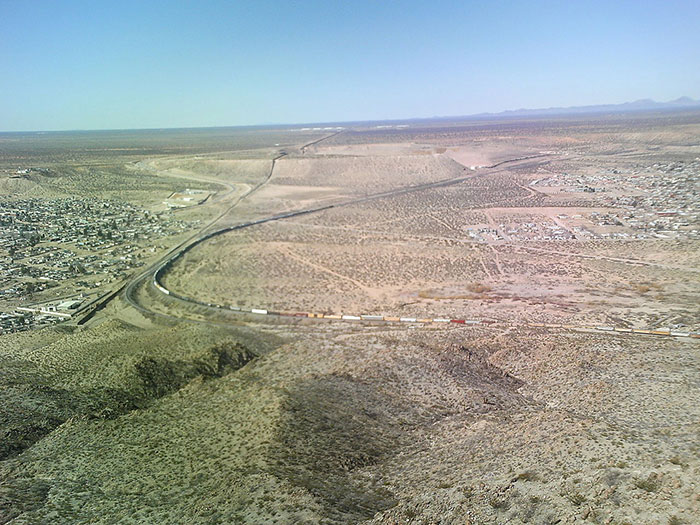
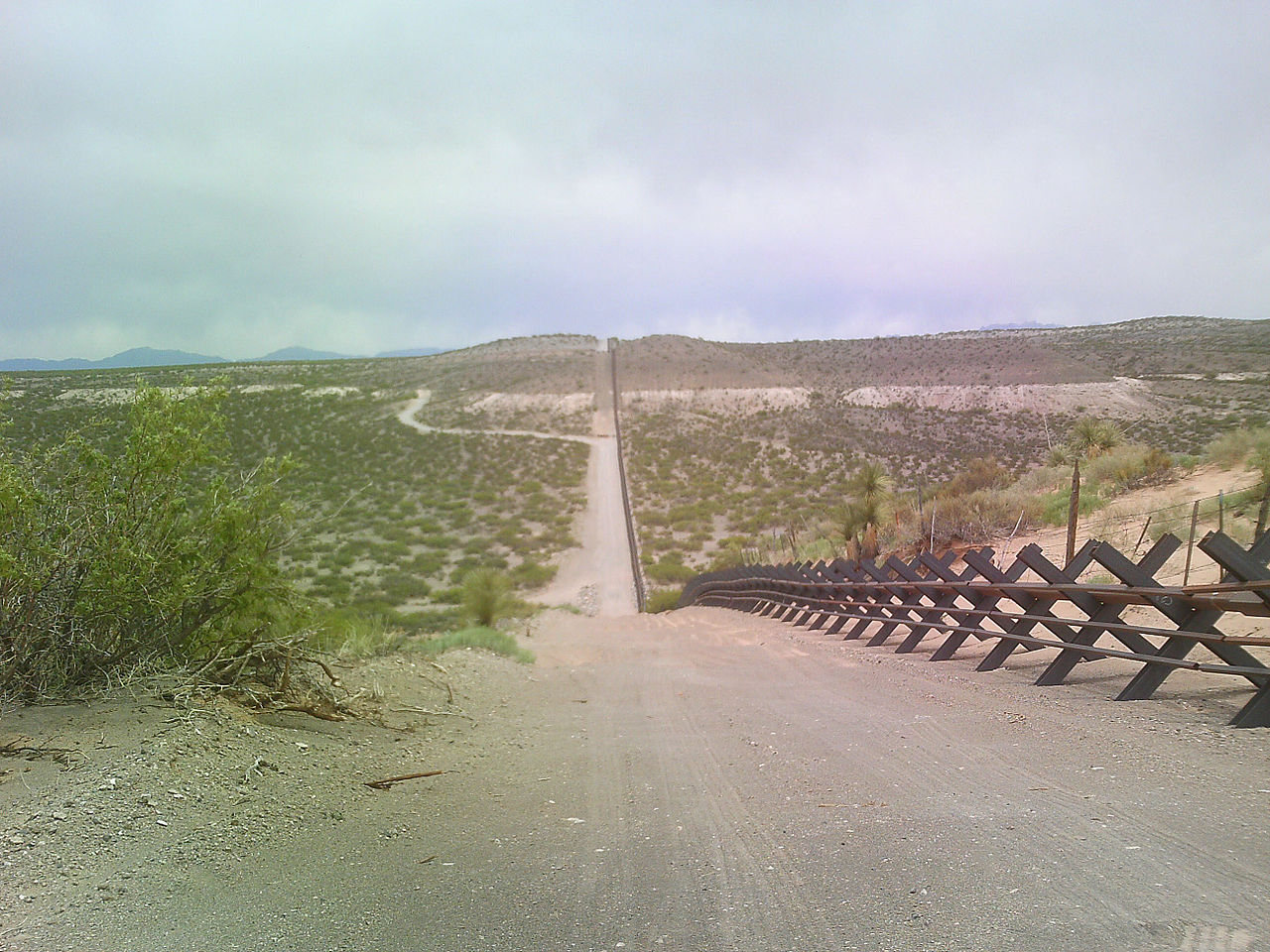
The start of the border fence in the state of New Mexico—just west of El Paso, Texas Photo Credit: MJCdetroit
This Too Shall Pass
“This too shall pass: Throughout the 2016 Presidential election, I knew a Trump presidency was a possibility, but I was not ready for it to become a reality. Late on November 8th, 2016 I called my parents, both comforted me while I lay in bed sobbing.
My family’s undocumented status has put us through tough times in our time in the United States, but I have never been more scared than now. There are fights ahead that I thought I would not have to face.
I have fought against many odds to achieve success in this country, and for the first time I truly feel like everything I have worked for can be taken away with one stroke from the President’s pen. But now, more than ever I am ready to fight.
As the months pass since the election, I continue to repeat the words that have gotten me through many trying time: This too shall pass.”
Anonymous, DREAMer*
* “DREAMer” is the term that describes young undocumented immigrants who were brought to the United States as children, who have lived and gone to school here, and who in many cases identify as American. The term originally took its name from a bill that has been proposed in Congress numerous times, the DREAM Act, but has never passed. The DREAM Act (short for Development, Relief, and Education for Alien Minors Act) was a bill in Congress that would have granted legal status to certain undocumented immigrants who were brought to the United States as children and went to school here.
U.S./Mexico border, with vehicle barrier, in New Mexico and Chihuahua near International Boundary Monument number 9.
Photo credit: MJCdetroit
Death on the Border
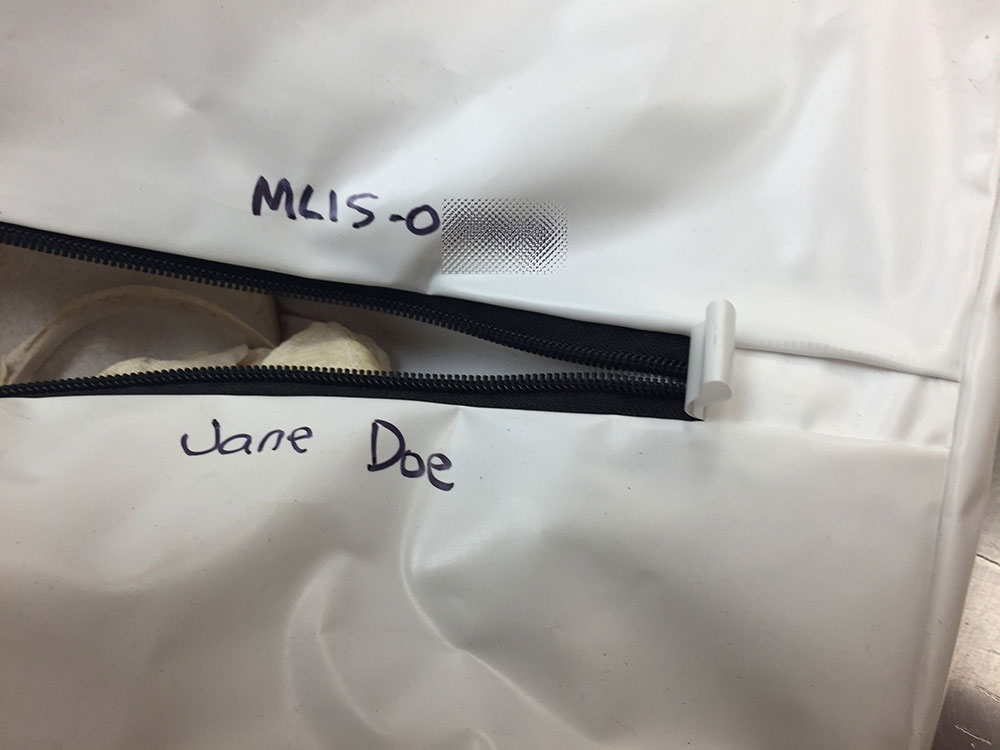
“A lot of my research has application in forensic anthropology, which uses anthropological techniques to identify missing people and solve crimes. Right now, much work in forensic anthropology is about trying to determine the nationality of skeletons found along the U.S.-Mexico border, so that remains can be sent to their nation of origin, and hopefully, returned to their families for burial. People dying attempting to cross the border aren’t just from Mexico. Many have traveled from countries like Guatemala, Honduras, and Venezuela in Central and South America.
I spent my Spring 2016 break collecting data at the Pima County Office of the Medical Examiner (PCOME) in Tucson. PCOME processes nearly all of the skeletons found in border areas in Arizona, averaging 207 every year 2005-2014. While there, I studied the skeletons of 42 people who died trying to cross into our country. They were men and women, tall and short, young and old.
People like me who work with the dead need to be dispassionate about our work. But to be honest, these bones got to me. I thought about why they died, trying to make a better life for their families and themselves. I thought about how they died, painfully, of thirst and exposure. And I thought about how Mexico and Arizona already share a deadly border, the Sonoran desert. I have never been in favor of building a border wall. But now I realize that a wall is pointless. The skeletons I saw represented people who traveled hundreds or thousands of miles, just to die trying to earn what many of us take for granted, opportunity in the U.S. If a 100,000 square mile desert won’t stop them, why would any wall?”
Heather Edgar, PhD, Curator of Human Osteology, Maxwell Museum of Anthropology, Associate Professor, Department of Anthropology, UNM
Republican Party Platform 2016: The Case for the Wall
“In a time of terrorism, drug cartels, human trafficking, and criminal gangs, the presence of millions of unidentified individuals in this country poses grave risks to the safety and sovereignty of the United States. Our highest priority, therefore, must be to secure our borders and all ports of entry and to enforce our immigration laws.
That is why we support building a wall along our southern border and protecting all ports of entry. The border wall must cover the entirety of the southern border and must be sufficient to stop both vehicular and pedestrian traffic. … The Department of Homeland Security must use its authority to keep dangerous aliens off our streets and to expedite expulsion of criminal aliens. Gang membership should be a deportable offense. Any previously deported illegal alien who continues to show a lack of respect for our borders and rule of law must be penalized. This is why we support stiffer penalties, such as a mandatory minimum sentence of five years, for any illegal alien who illegally re-enters our nation after already having been deported.”
Excerpted from the 2016 Republican Party Platform

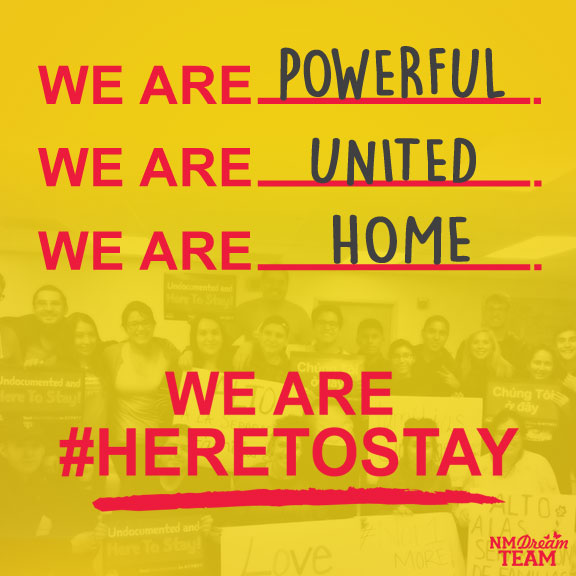
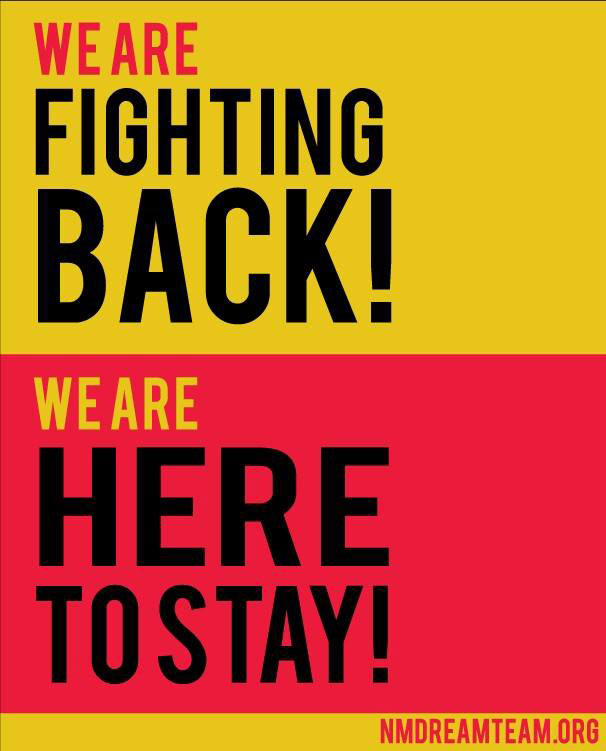
The New Mexico Dream Team
“The New Mexico Dream Team is a statewide network committed to create power for multigenerational, undocumented, and mixed status families towards liberation. Through trainings and leadership development, we work to engage our community and allies, in becoming leaders using an intersectional, gender, and racial justice lens—to develop and implement an organizing and advocacy infrastructure for policy change fighting to dismantlesystematic oppression.
Our vision is to build people power for the uplifting of immigrant communities & people of color. We are committed to empower multigenerational undocumented and mixed status families for liberation.”
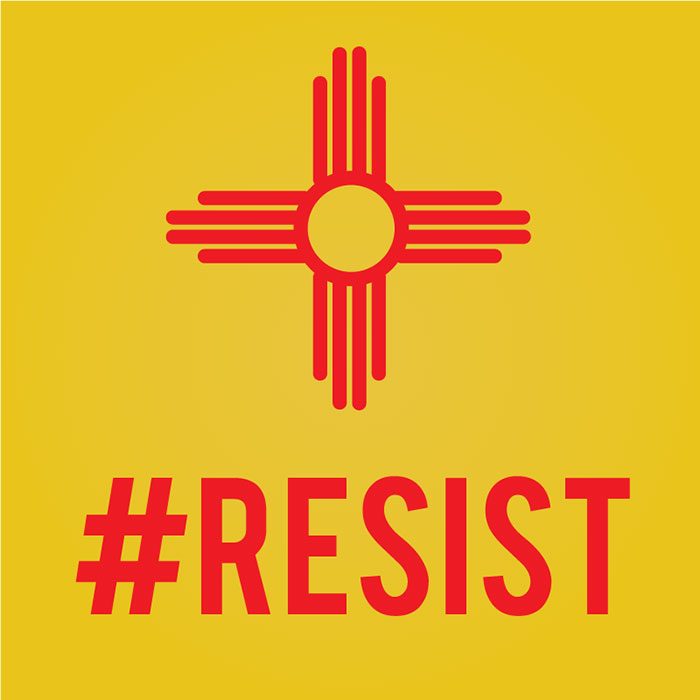
New Mexico Dream Team “#Resist” poster.
Credit: New Mexico Dream Team


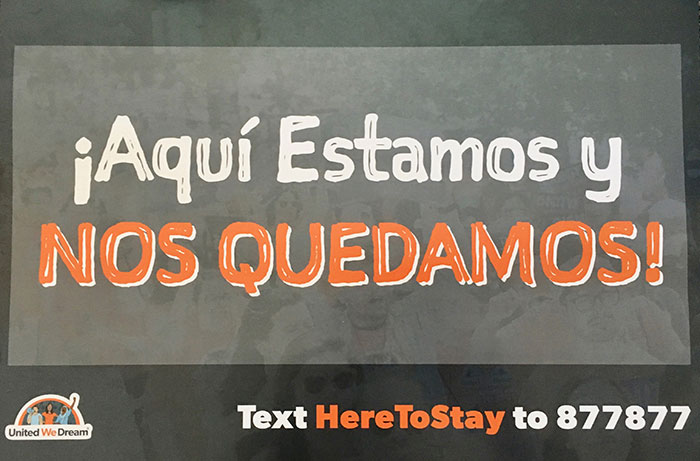
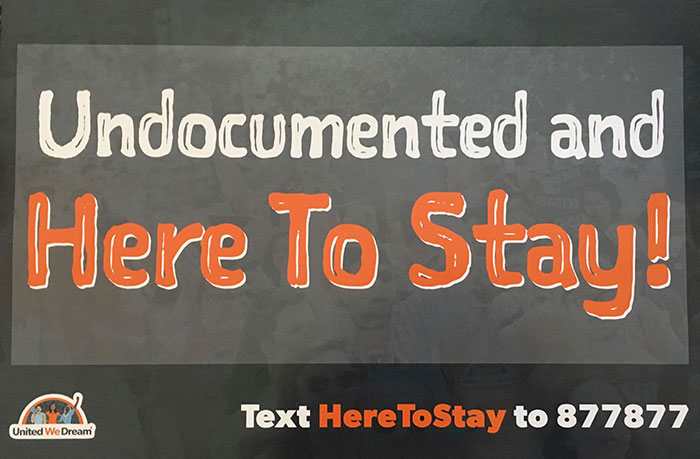
#ThisIsNotAWall
During the Spring semester of 2017 in the Department of Architecture Studio taught by Assistant Professor Ane Gonzalez Lara, the students enrolled in ARCH402 Architectural Design VI studied the meaning of borders and the role that architecture has in their definition. The students started by working on a project in the Korean DMZ and continued designing alternatives to the wall that President Trump is proposing between Mexico and the United States.
#ThisIsNotAWall reflects the students’ designs to create alternatives to the proposed U.S./Mexican Border wall. Some projects are a direct answer to the wall and others aim to redefine the border itself. The projects are also accompanied by a letter to President Trump describing the proposal and the advantages of the design compared to the proposed wall. You can find the student’s proposed designs as well as their letters in this exhibition.
As a result of the studio, the students and Assistant Professor Gonzalez Lara started the twitter account #ThisIsNotAWall to share alternatives to the proposed wall across disciplines and scales, please visit the project on twitter as well.
ARCH 402 | Border Studio
Acknowledgments
Exhibit Curation, Design and Preparation
Devorah Romanek – Curator of Exhibits, Maxwell Museum, UNM
David Phillips – Curator of Archaeology, Maxwell Museum, UNM
Michael Rendina – Preparator, Maxwell Museum, UNM
Mario Devora – Graphics, Maxwell Museum, UNM
Cesar Vargas – Prepator Assistant, Maxwell Museum, UNM
Public Programs and Education
Mary Beth Hermans – Public Programs Manager, Maxwell Museum, UNM
Amy Grochowski – Curator of Education, Maxwell Museum, UNM
Special Thanks
Many people contributed to this exhibition, by providing personal accounts:
Dave Phillips
Postcommodity (Raven Chacon, Cristóbal Martínez, and Kade Twist)
Selene Concepsion Vences-Ortiz
Nora J. Vences Ortiz
Nalleli Reyes Garcia
Anonymous UNM Dreamer
Heather Edgar